Why Fall Is the Season to Deal With Your Gutters
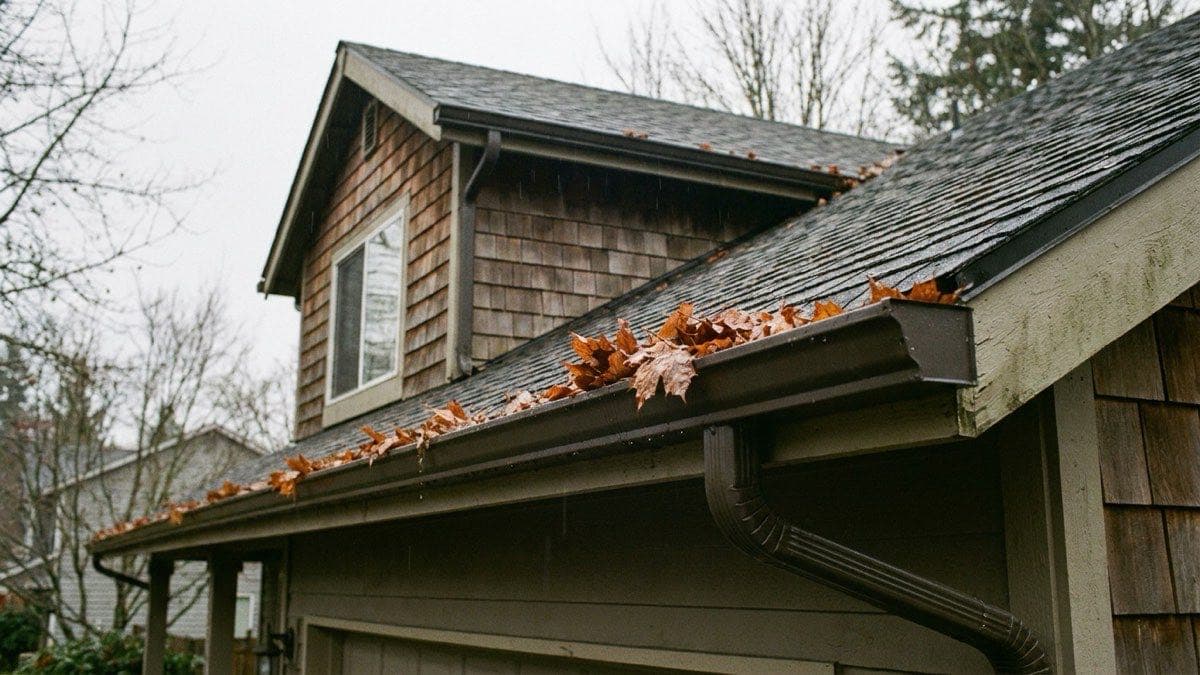
In the Pacific Northwest, gutters have one job: move tens of thousands of gallons of winter rain away from your roofline and foundation. And the window to make sure they can actually do that job is right now: after the first leaves drop and before the heavy rain arrives.
Why timing matters more than people think
A clogged or failing gutter doesn't announce itself. Water quietly overflows the back edge, runs down the fascia, and soaks into the soil right against your foundation. By the time you see the symptoms (peeling paint, stained siding, a damp crawl space, ice at the eaves), the damage has been accumulating for months.
Fall is the pivot point. Deal with gutters in September or October and you go into the wet season with a clean, sound system. Wait until you notice a problem in December and you're booking repairs in the busiest, wettest, least pleasant season for roof work.
Clean, repair, or replace?
Clean if your gutters are structurally sound and just full of debris. Most homes surrounded by trees need this once or twice a year, and fall is the essential one.
Repair if you have isolated problems: a sagging section, a leaking corner seam, a downspout that's pulled loose. Small fixes now prevent bigger ones later. A sagging gutter holds standing water, and standing water accelerates rust and pulls fasteners out of the fascia.
Replace when the problems stop being isolated. Rust spots in multiple sections, seams that re-open after every repair, gutters pulling away from the house, or persistent overflow even when clean. These are signs the system is at the end of its life. Most older homes have sectional gutters; replacements today are usually seamless aluminum, custom-formed on site to the exact length of each run, which eliminates the leak-prone joints entirely.
What replacement actually involves
A gutter installation crew measures each run, forms the new gutters from coil stock on site, sets the correct slope toward the downspouts, and hangs everything with hidden fasteners into solid fascia. A typical single-family home takes a day or less. The variables that drive the price are straightforward:
- Total linear feet. The biggest factor by far
- Stories and roof access. Second-story work takes longer and needs more safety setup
- Number of downspouts and corners. Each corner is a fabricated joint
- Material and gauge. Aluminum is the standard; heavier gauge and special colors cost more
- Guards or screens. Optional, but they change the fall-cleaning math if you're surrounded by trees
The DIY line
Cleaning single-story gutters is a reasonable weekend job if you're comfortable on a ladder and methodical about ladder safety. Repairs and anything on a second story are where the math changes. Falls from ladders are one of the most common serious home-maintenance injuries, and a professional crew with standoffs and proper staging clears a whole house in a fraction of the time.
Replacement isn't a DIY job in any practical sense: seamless gutters require the forming machine, and getting slope right over a 40-foot run is harder than it looks.
Getting a number without the hassle
Because gutter pricing is driven by measurable facts like linear feet, stories, corners, and downspouts, it's one of the services where instant pricing works really well. Get an instant gutter installation quote from verified local contractors: you'll see the full price breakdown up front, before the rainy season books everyone solid.